Space, without the launch.
Book existing satellite capacity for your task. Run software, capture data and get results back on Earth.
Solution
One platform. Your mission.
Book a satellite — or a fleet — in a few clicks.
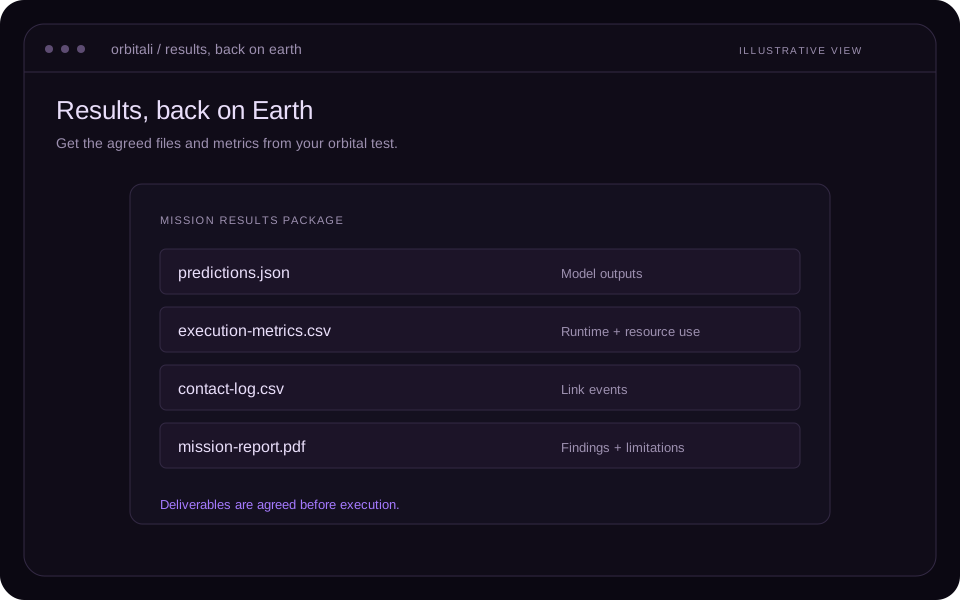
Choose your task, compare compatible capacity and plan when it should run. The operator approves the workload and returns your results.
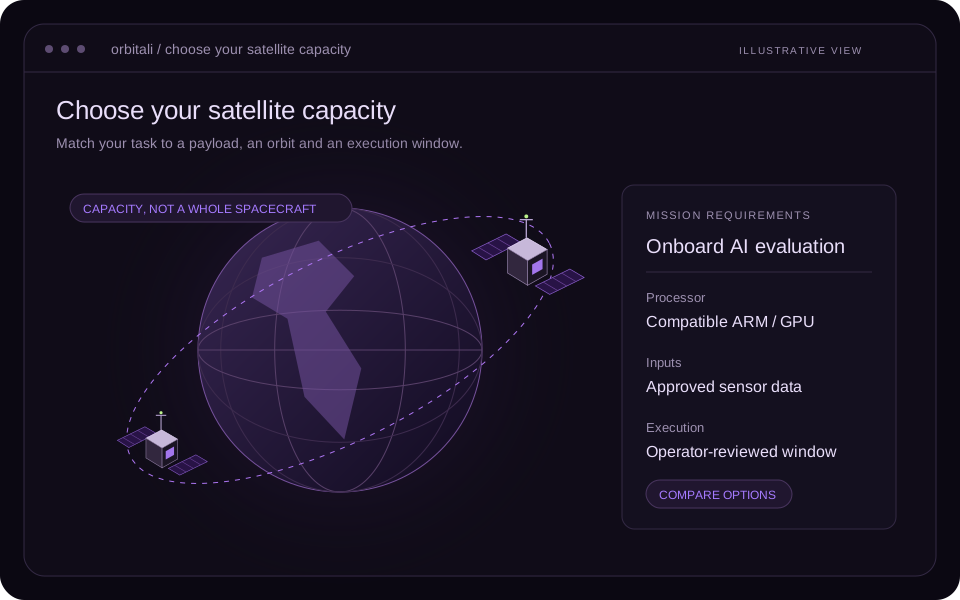
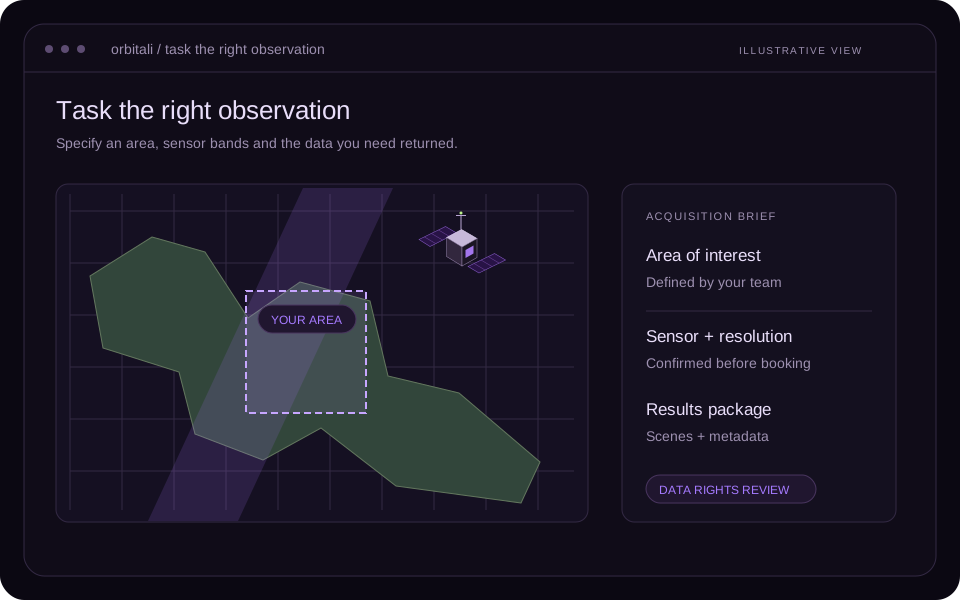
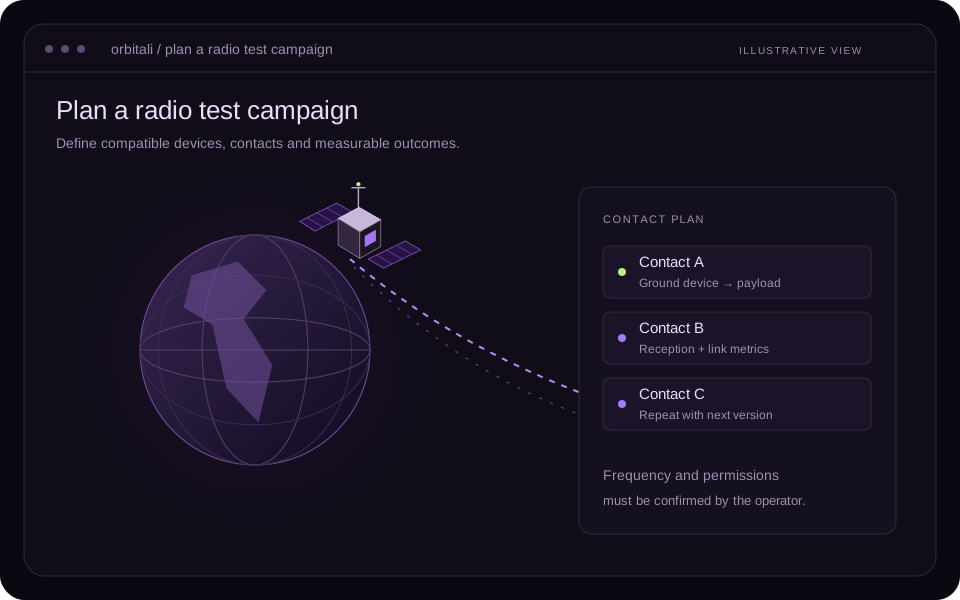
MISSION EXAMPLES
A task. A satellite.
A result you can use.
See what a team could book, what it would receive, and how a shared pilot could compare with a dedicated mission.
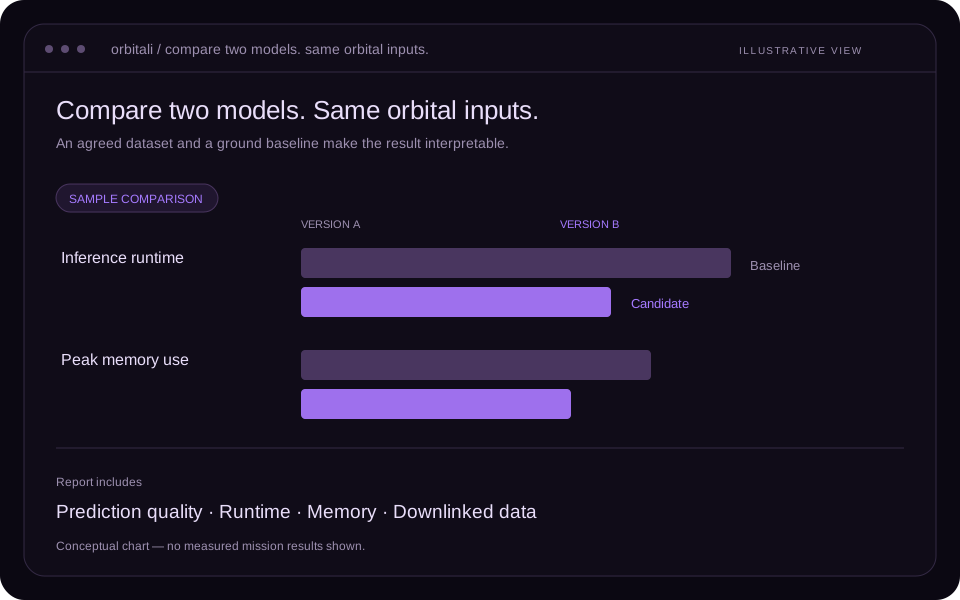
Two models. One orbital test.
Compare a new AI model with your existing version on the same satellite images.
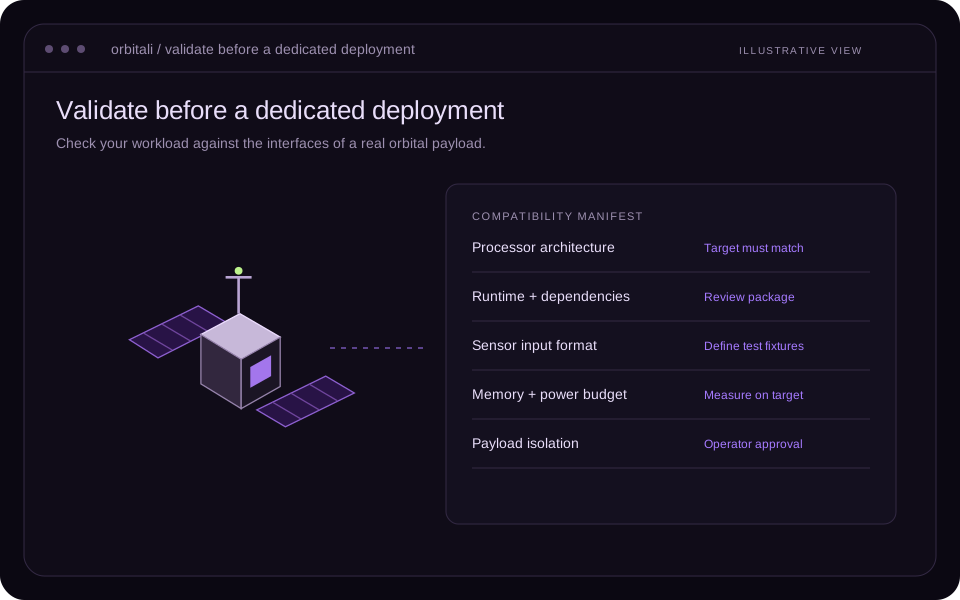
Prove the software before the satellite.
Validate a software package on target payload hardware before committing to a dedicated mission.
Test the protocol. Use an existing orbit.
Compare receiver software across a defined set of satellite contacts with compatible ground devices.
Illustrative scenarios, not completed customer projects. Budgets and schedules are planning assumptions, not quotes or guaranteed delivery times.
ONE CONNECTED WORKFLOW
Your mission, connected.
From your brief to compatible satellite capacity. One place to plan the workload, execution window and data you need back.

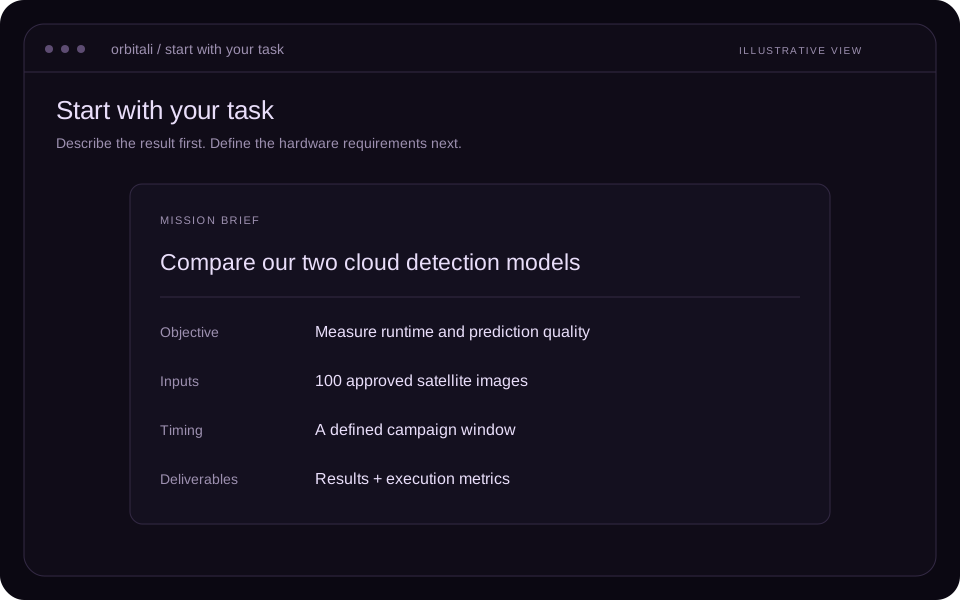
Defined scope
Specify the workload, inputs, resource budget and expected outputs.
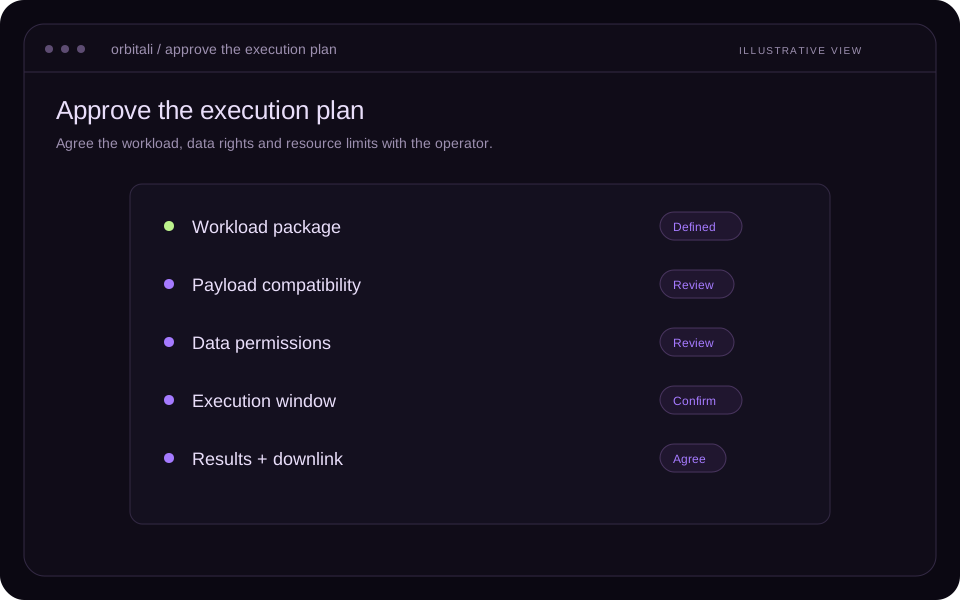
Operator approval
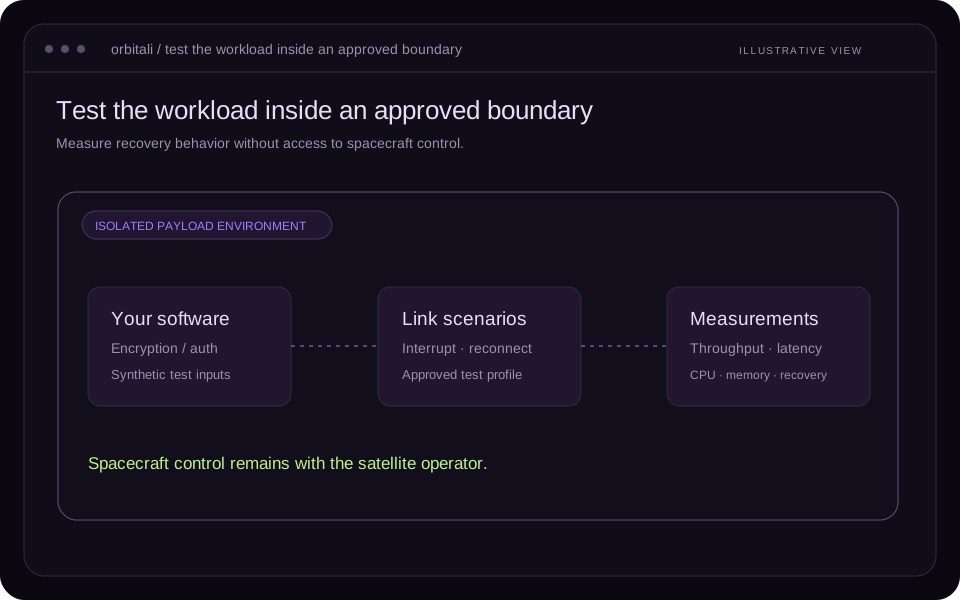
Spacecraft control stays with the operator. Only approved payload interfaces are in scope.
Repeatable tests
Agree a baseline and comparable measurements for each software version.
FAQs
Questions? Answers.
What you can plan, what needs review, and how to get started.
No. The concept is to use compatible capacity aboard existing satellites. Availability depends on the payload, operator and mission requirements.
Start with onboard AI evaluation, software validation, Earth observation or scoped radio experiments. The Mission Finder helps turn these goals into a mission brief.
No. Processor architecture, runtime, power, memory, sensor access, data rights and isolation requirements all need review. A suggested match is not an operator approval.
The preview shows illustrative prices per compute minute, image scene or radio experiment minute. Final pricing would depend on integration, scheduling, data rights and downlink.
This is an interactive product preview. You can explore sample capacity, create a plan and download a brief. Operators, payments and live bookings are not connected.